
Report from “PSMD School 2026” at Chulabhorn Royal Hospital, Thailand: The Forefront of AI Automation in Radiation Therapy
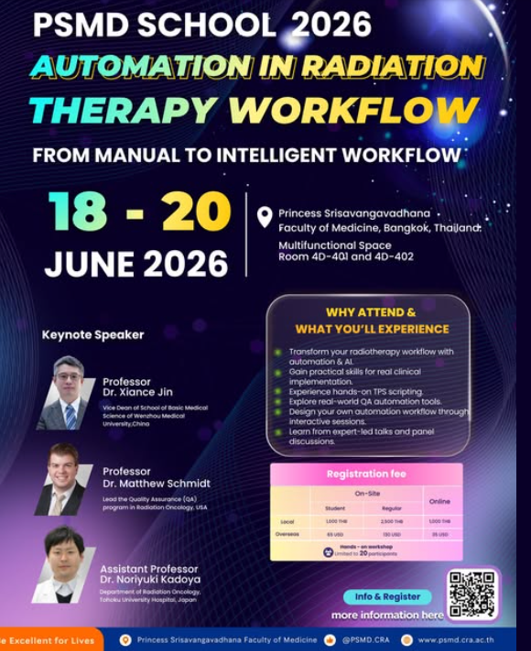
I was recently invited to speak at the “PSMD School,” a biennial event hosted by the Princess Srisavangavadhana Faculty of Medicine, Chulabhorn Royal Academy in Thailand.
This year’s theme was “Automation in Radiation Therapy Workflow.” With leading researchers in this field gathering from the United States, China, and Japan, I was deeply honored to represent Japan and give a lecture.
After finishing my university lectures on Friday morning, I departed from Sendai and arrived in Bangkok at 4:00 PM. From there, I headed straight to the welcome reception at 6:00 PM to connect with the organizing committee and fellow guest lecturers.
Medical Physics Across Borders and an Unexpected “Night Mission”
At the reception, I had the opportunity to dive deep into discussions regarding clinical duties, frontline challenges, and education with fellow lecturers—Dr. Jin Xiance (The First Affiliated Hospital of Wenzhou Medical University, China) and Dr. Matthew Schmidt (Washington University in St. Louis, USA)—as well as the medical physicists and students from Chulabhorn Royal Hospital.
Reference Links:
Dr. Jin Xiance Introduction Page
Dr. Matthew Schmidt Introduction Page
Our conversations highlighted the fascinating structural differences in medical physics across countries. Chulabhorn Royal Hospital currently employs eight medical physicists and operates three linacs (all Varian systems, including TrueBeam). Unlike in the US, the medical physicists here are also responsible for radiation treatment planning. On the other hand, because the US utilizes dedicated dosimetrists, medical physicists themselves do not typically handle day-to-day treatment planning (creating dose distributions). Dr. Schmidt, who joined us this time, serves as the Chief QA Medical Physicist, and his research focuses on API development using RapidPlan and scripting.
It was during these chats that an unexpected twist came to light. Regarding the next day’s schedule, I had prepared a single one-hour presentation on the “Development of AI Automated Planning and AI Patient QA.” However, it turned out they were actually expecting two presentations (a total two-hour slot)! Furthermore, I discovered there would be a one-hour free discussion session on AI automated planning right after. After returning to my hotel post-reception, I spent the night frantically adding slides and preparing for the discussion, and managed to get everything ready just in time for the next morning.
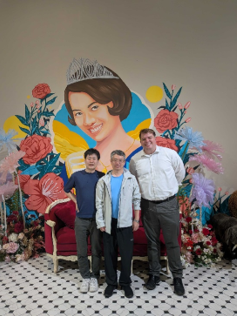
▲ Left: Dr. Kadoya, Center: Dr. Jin, Right: Dr. Schmidt
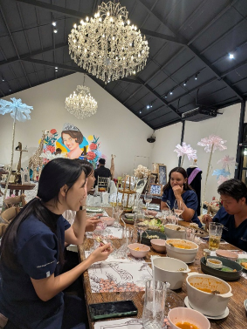
▲ A friendly dinner with medical physicists and students from Chulabhorn Hospital.
The “Four Major Hubs” Driving Medical Physics in Thailand
Through this visit and discussions with local faculty, I also gained a deeper understanding of the “Four Major Hubs” driving medical physics and radiation therapy research in Thailand:
- Mahidol University: A university with which our lab has long-standing, deep ties, having hosted several of their international students and alumni.
- Chulalongkorn University: One of Thailand’s most historic and prestigious top-tier royal universities and hospitals.
- Chiang Mai University: The core powerhouse robustly supporting healthcare and research in Northern Thailand.
- Chulabhorn Royal Academy (Chulabhorn Hospital): Our host for this trip, and a cutting-edge center actively leading the field of radiation therapy in Thailand.
It was incredibly stimulating to see firsthand how these institutions challenge and inspire one another, rapidly elevating the standard of radiation therapy across the entire country.
Presentations and a High-Energy Panel Discussion
The next morning, we met in the hotel lobby at 8:30 AM, and the presentations kicked off at 9:00 AM. Dr. Schmidt kindly brought me an extra-large, “American-sized” iced coffee, and the two of us enjoyed a great chat on our way to the venue.
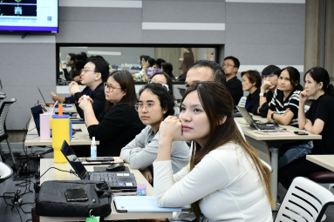
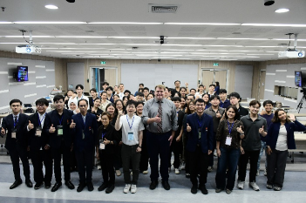
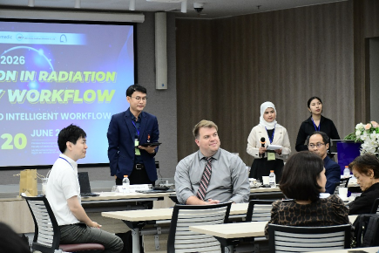
The venue was packed with about 50 in-person attendees, not only from Thailand but also from various Asian countries, including the Philippines and South Korea. Following my one-hour presentation, we opened the floor for Q&A, which turned into a highly active session with over 10 questions coming from both the in-person audience and online participants. Answering these questions was a fantastic learning experience that helped deepen my own research ideas and knowledge.
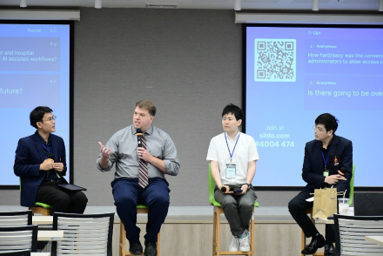
In the subsequent panel discussion, we engaged in heated debates with the audience and guest lecturers on several key topics.
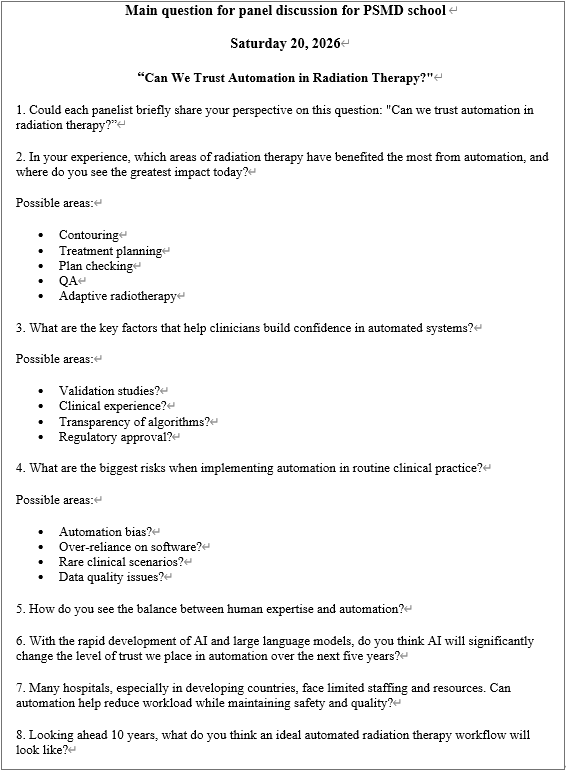
Through these discussions, it became clear that the participants were thinking just as deeply—if not more so—about the “AI-driven future of radiation therapy” as we are in Japan. While there are high expectations for AI, there is also shared anxiety regarding how to smoothly integrate it into daily clinical workflows. It was a valuable opportunity to reaffirm that regardless of geography, we all share the exact same challenges.
Closing Remarks
This visit allowed me to experience Thailand’s powerful academic network firsthand. It proved to be a highly fruitful trip, yielding requests for student exchanges and joint research collaborations from universities in Thailand and the Philippines. Moving forward, I will continue to cultivate these international relationships and dedicate myself fully to the advancement of radiation therapy!
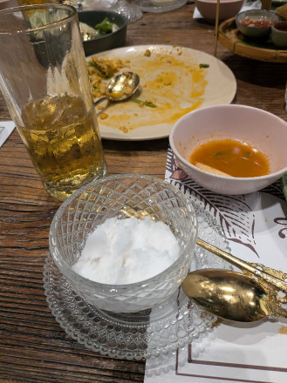
▲ Bonus: The Thai ice cream was pure, rich, and absolutely delicious!
- タグ:
- [News]