
September 26–29, 2026: ASTRO 2026
We attended ASTRO 2026 (American Society for Radiation Oncology), where Tanno presented a poster titled “Development of ‘DualGADE-Net’ for Simultaneous Prediction of Gamma Passing Rates and Absolute Dose Errors In Patient-Specific QA,” and Koga presented a poster titled “Enhancing Deep Learning-Based GTV Segmentation in Head and Neck Cancer: The Critical Role of Target-Specific Manual Registration Refinement.”
- Dates: September 26–29, 2026
- Location: Thomas M. Menino Convention & Exhibition Center (Boston, MA)
- Conference: ASTRO 2026
Authors: Seiya Koga and Haruto Tanno (2nd-Year Master’s Students)
This was our first time participating in an international conference. Ever since we decided to join this laboratory, presenting our research abroad had been one of our primary goals. We are thrilled to have had the opportunity to present on-site and would like to express our deepest gratitude to the professors and advisors who guided us throughout the process.
Beyond serving as a conference report, we hope this article acts as a helpful guide for students who feel, “I want to attend an international conference, but I don’t know where to start.” Specifically, alongside basic background information—such as what ASTRO is and how it differs from AAPM—we have compiled a chronological overview of everything we undertook leading up to the conference: setting research milestones, securing funding, submitting abstracts, registering, preparing for travel, and designing our posters. We have also included key lessons learned from our own experience, highlighting things we wish we had started earlier.
We hope this article gives Master’s and Ph.D. students who are hesitating to submit an abstract the encouragement they need to take that first step.
What is ASTRO?
ASTRO (American Society for Radiation Oncology) is the world’s most prestigious academic society in the field of radiation medicine, with a strong focus on radiation therapy. Attracting over 10,000 attendees, it brings together a wide range of professionals from around the globe involved in radiation therapy, including radiation oncologists, nurses, medical physicists, radiation therapists, and dosimetrists. The 2026 Annual Meeting was held in Boston from September 26 to 30, featuring more than 2,500 presented abstracts.
A defining feature of ASTRO is its heavy emphasis on research directly tied to clinical practice. In the high-profile Plenary Sessions, groundbreaking results—such as Phase III randomized controlled trials that have the potential to change treatment protocols overnight—are presented.
At the same time, medical physics plays a major role. The meeting features dedicated tracks such as “Radiation and Cancer Physics,” along with joint oral sessions bridging physics and biology. In 2026, the scientific program included 32 sessions centered on “AI” and 31 on “Adaptive” (adaptive radiation therapy). Consequently, ASTRO offers ample opportunities for medical physics students to present their research and engage in impactful discussions.
Differences from AAPM
For students studying medical physics, another familiar international conference is AAPM (American Association of Physicists in Medicine). Since many students wonder which society to submit their abstract to, we have summarized the key differences below.
| Item | ASTRO | AAPM |
| Official Name | American Society for Radiation Oncology | American Association of Physicists in Medicine |
| Membership | Approx. 11,000 members. Multidisciplinary group centered around radiation oncologists, including nurses, medical physicists, and radiation therapists. | 9,602 members (from 84 countries). Scientists and professionals centered around medical physicists. |
| Scope | Comprehensive clinical radiation therapy (disease-specific treatment outcomes, clinical trials, treatment techniques, physics, biology, etc.) | Comprehensive medical physics (physics, technology, and QA/QC in radiation therapy and diagnostic imaging, etc.) |
| Annual Meeting | 2026: Sept 26–30 (Boston) 2027: Sept 18–22 (Chicago) | 2026: July 19–22 (Vancouver) 2027: July 25–28 (Columbus) |
In terms of membership composition and scope, AAPM serves as a platform where medical physics specialists engage in deep technical and methodological discussions. In contrast, ASTRO is a venue to demonstrate the clinical significance of research to a multidisciplinary audience that includes clinicians. Even for the exact same study, AAPM tends to focus on methodological novelty and accuracy, whereas ASTRO evaluates “how the results could change clinical practice.”
Additionally, because AAPM takes place in July and ASTRO in September, you can also select which conference to aim for based on your research progress and abstract submission deadlines.
Schedule Leading Up to ASTRO
The abstract submission deadline for ASTRO is approximately seven months prior to the conference. Furthermore, securing funding and organizing your research timeline must begin well in advance. Based on the actual schedule for ASTRO 2026 and our own reflections on what we wish we had done earlier, we have compiled a step-by-step timeline of what to do and when.
| Timeframe | Official Conference Dates | Action Items |
| Initial Planning Phase | — | Establish research milestones through the summer, incorporate a potential ASTRO presentation into the plan, and share it with your advisors. |
| Upon Deciding to Submit | — | Begin securing funding. Search for grants or travel scholarships and prepare applications. |
| By November | — | Define your core research question in a single sentence and outline the preliminary results. |
| Dec 4 | Abstract Submission Opens | Review guidelines carefully and consult with co-authors regarding abstract structure. |
| Jan – Feb | — | Draft the abstract, obtain approval from all co-authors, and complete Conflict of Interest (COI) disclosures. |
| Feb 24 | Abstract Submission Deadline (11:59 PM PT = Feb 25, 4:59 PM JST) | Pay the submission fee ($75 per abstract) and complete submission. |
| May 14 | Acceptance Notification | Verify presentation format and begin travel arrangements (booking flights and accommodations). |
| June 25 | Early-Bird Registration Deadline | Register early to lock in lower fees ($99 for Student Members, $149 for Non-Members). |
| June 28 | Abstract Withdrawal Deadline | — |
| July – August | — | Apply for ESTA, finalize flight/hotel bookings, and create presentation materials. |
| August 13 | Advance Registration Deadline | Complete registration before standard rates apply ($199 for Student Members, $249 for Non-Members thereafter). |
| September | Abstracts Released (Sept 25) | Review the scientific program in advance and bookmark sessions/presentations to attend. |
| Sept 26–30 | ASTRO 2026 Annual Meeting | Present research on-site and participate in sessions. |
Note: The dates listed above correspond to ASTRO 2026. Schedules may vary in future years, so please always verify the official ASTRO website for the most up-to-date information.
Step-by-Step Action Guide
Step 1: Set Research Milestones
The first thing you should do is establish research milestones leading up to the summer, explicitly incorporating “Presenting at ASTRO” into your timeline. Be sure to share this roadmap with your advisors.
Having ASTRO as a defined milestone helps maintain momentum toward producing tangible research output. Furthermore, sharing your plan with your advisors from the beginning makes it much easier to seek guidance whenever you encounter challenges along the way.
Step 2: Start Securing Funding Early
As soon as you decide to submit an abstract, you must immediately begin securing funding. This was the single biggest area where we felt, “We wish we had started earlier.”
In our case, even after selecting flights with two layovers to minimize costs, total travel expenses came to approximately 350,000 JPY per person. When we searched for travel grants, many application deadlines had already passed, leaving us eligible to apply for only two: the Nitori International Scholarship Foundation grant and the Marubun Research Promotion Foundation grant.
Through this application process, we realized the vital importance of proposal writing skills. Having almost no prior experience drafting grant applications, we struggled to effectively communicate the significance of our research.
Key Lessons Learned Regarding Funding:
・Waiting for the acceptance notification is too late: Financial planning must begin the moment you decide to submit (or upon submission at the latest). Crafting a compelling proposal takes time, so it is essential to start early and spend time articulating your research in your own words.
・Search broadly and early: Application periods and eligibility criteria vary widely by foundation, making early research critical.
・Seize every opportunity to write grant proposals: Grant writing is a skill that improves with practice—take advantage of any chance to apply.
Step 3: Post-Acceptance: Registration and Travel Arrangements
Once you receive your acceptance notification, your immediate next steps are conference registration and travel arrangements. Because ASTRO’s registration fees increase in three sequential price tiers as the event approaches, registering early is strongly recommended.
| Category (In-Person / Full Meeting) | Early Bird (Until June 25) | Advance (June 26 – Aug 13) | Standard (From Aug 14) |
| Students / Graduate Students (ASTRO Member) | $99 | $149 | $199 |
| Students / Graduate Students (Non-Member) | $149 | $199 | $249 |
Note on ESTA: Japanese citizens traveling to the United States for short-term stays require an Electronic System for Travel Authorization (ESTA) rather than a visa. According to the Ministry of Foreign Affairs of Japan, applying at least 72 hours prior to departure is recommended. The fee is $40.27 per person (effective January 1, 2026), and authorization is generally valid for two years. Make sure to apply strictly via the official government portal (esta.cbp.dhs.gov). Be extra cautious of unofficial third-party websites that charge excessive service fees (often charging roughly $100 / ¥10,000 extra above the official fee).
Step 4: Researching Sessions to Attend in Advance
At ASTRO, numerous concurrent sessions take place simultaneously throughout each day. We strongly recommend bookmarking presentations you wish to attend in advance via the Annual Meeting Portal. In 2026 alone, there were 32 sessions focused specifically on “Artificial Intelligence (AI).”
When browsing sessions, a helpful strategy is to search using methodology keywords rather than specific disease or anatomical names. For example, when searching for terms like “registration,” “segmentation,” and “multimodal,” I found several studies tackling similar technical challenges to my own work, even across different anatomical sites.
At the Conference
Both of our abstracts were accepted as poster presentations. Tanno presented “Development of ‘DualGADE-Net’ for Simultaneous Prediction of Gamma Passing Rates and Absolute Dose Errors In Patient-Specific QA,” and Koga presented “Enhancing Deep Learning-Based GTV Segmentation in Head and Neck Cancer: The Critical Role of Target-Specific Manual Registration Refinement.”
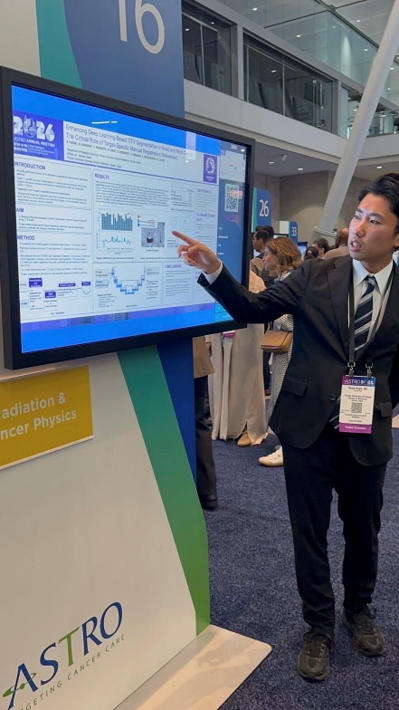
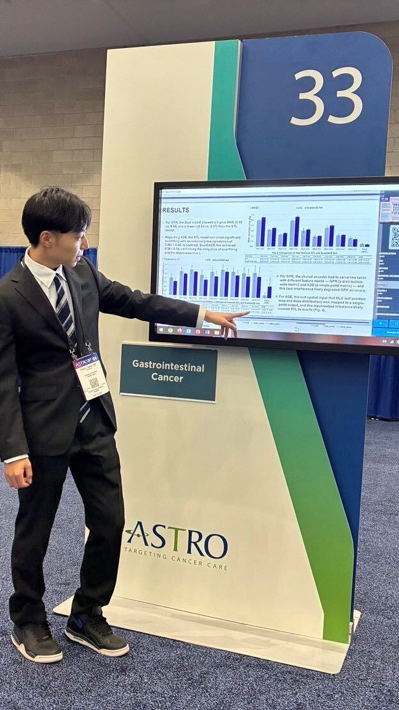
▲Left: Koga during his presentation / ▲Right: Tanno during his presentation
Poster Sessions: A Venue for Dialogue
Unlike oral sessions, the poster sessions where we presented are characterized by the very close physical proximity between the presenter and the audience. We felt it would be a missed opportunity to simply read from a prepared script. Looking around, many presenters were speaking engagingly, maintaining eye contact with their listeners. Consequently, there were many questions, and lively discussions were taking place at many posters. Even if you are not confident in your English, the poster format allows you to speak one-on-one with attendees while pointing at diagrams. We believe posters are an excellent format for presenting research at one’s first international conference. (The ICRPT, held in the spring, is also an international conference and would serve as good practice!)
Arrive Early for Oral Presentations
The venue for this meeting, the Thomas M. Menino Convention & Exhibition Center, is many times larger than Pacifico Yokohama, the venue for the spring joint conference (JSRT/JSMP). If the locations are far apart, it can take about 10 minutes to walk from the poster hall to an oral presentation room. We recommend allowing plenty of time to move between locations if there is an oral presentation you want to hear. Just walking around the venue made us truly appreciate the massive scale of this conference.
Other Notes from the Conference
Technical Exhibits
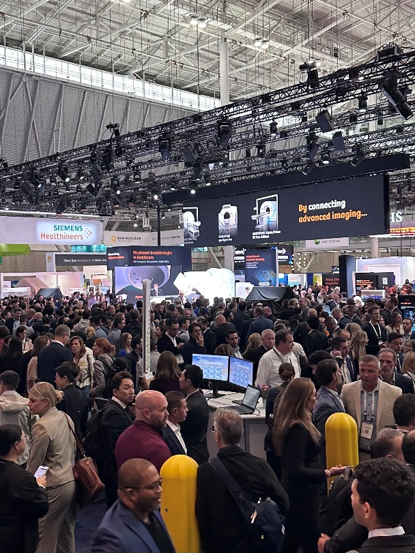
The area for corporate booths was about two to three times larger than ITEM (the exhibition at the spring joint conference). There were many companies not often seen in Japan, so we found that briefly researching the exhibiting companies beforehand made it easier to understand their presentations. Everyone at the booths was very kind and gave detailed explanations, including product demonstrations.
Additionally, free cafe corners are scattered throughout this area. I (Tanno) enjoyed a caramel cafe mocha. We felt that being able to have frank conversations with company representatives with a drink in hand is an experience unique to ASTRO.
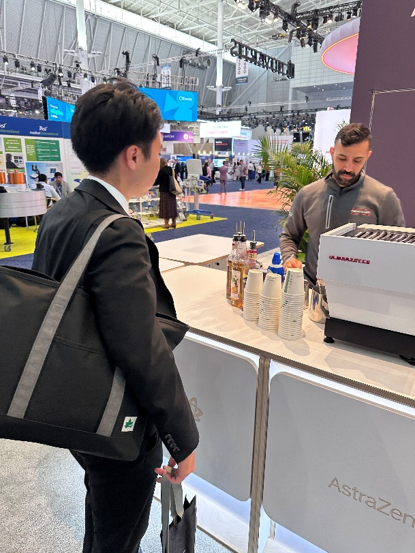
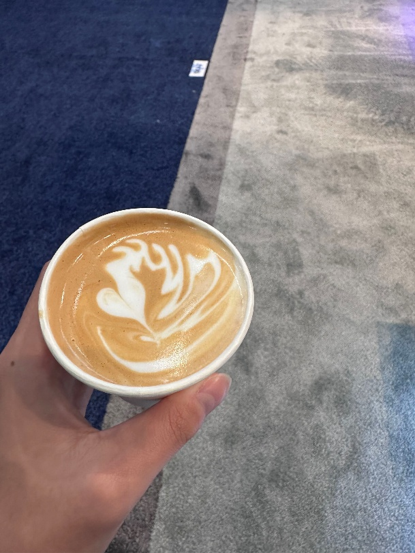
▲Left: Free cafe area / ▲Right: The caramel cafe mocha I ordered
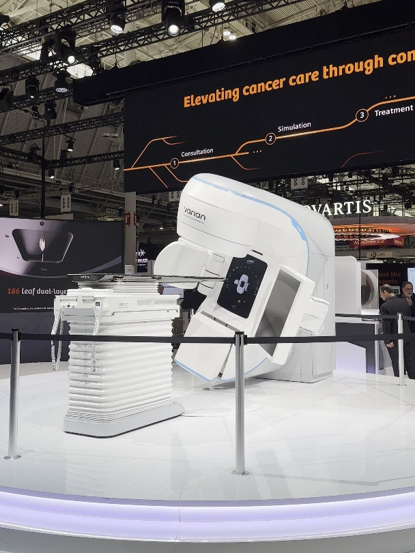
Announcement of Varian’s New Linac (Accela)
At the exhibition hall, Varian held a launch event for their new linear accelerator. With a massive countdown timer echoing across the venue followed by the grand unveiling of the new product (Accela), it was a flashy and uniquely American presentation. (We actually learned about this launch event thanks to a representative at the MVision booth we were visiting at the time!)
https://cancercare.siemens-healthineers.com/ja/products/radiotherapy/radiotherapy-treatment-delivery
▲Left: Unveiling of Accela / ▲Right: The unveiled Accela
Other Stories from Boston
Since Boston is famous for its seafood, we treated ourselves to some lobster! The cost of living in Boston is extremely high—a single glass of the wine pictured here cost over 2,000 JPY… We will leave the final bill to your imagination! That being said, it was absolutely delicious!!

▲ Boston’s famous lobster
In Closing: To Students Hesitating to Submit an Abstract
There were two main reasons why we decided to submit our abstracts to ASTRO. First, ASTRO is the world’s most prestigious conference in the field of radiation therapy. If we were going to challenge ourselves with an international conference, we wanted to present our work in a venue where radiation therapy experts from all over the world gather.
Second, our laboratory provides the research environment and attentive mentorship from our professors needed to present at such a high-level conference. On our own, we might have thought, “Presenting at ASTRO is out of our reach.” However, knowing that we had the backing to take on this challenge within this lab was the single biggest factor that pushed us to submit.
To be honest, both of us (Koga and Tanno) struggled during our first year and had a hard time producing results. Submitting an abstract less than a year after starting research naturally brings a lot of uncertainty. Yet, by setting the clear goal of “Presenting at ASTRO,” we were forced to bring our research together into a coherent whole by the deadline. Reviewing our work step-by-step—from the abstract to the poster and the English explanations—helped us clearly identify the strengths and weaknesses of our research.
On-site, because we were attending as presenters ourselves, we listened to other presentations while actively thinking, “Is there anything here I can apply to my own research?” Every step of the journey, from drafting the abstract to presenting on-site, undeniably contributed to our growth. Having such an opportunity during a Master’s program is truly rare.
To all students assigned to this laboratory: we strongly encourage you to take on the challenge. You have what it takes, and with the guidance of Professor Kadoya and the rest of our faculty, you will be in great hands.